Welcome to our comprehensive guide about pinoy chicken recipe.
Introduction: The Rich Flavors of Pinoy Chicken Recipes
The Philippines boasts a culinary landscape as vibrant and diverse as its archipelago. At its heart lies the humble chicken, transformed into an array of dishes that tantalize taste buds and tell stories of tradition. Pinoy chicken recipes are not merely meals; they are celebrations of flavor, history, and community. Indeed, these dishes showcase a remarkable blend of indigenous ingredients and influences from centuries of trade and colonization. Therefore, understanding the essence of Filipino chicken cuisine means appreciating this rich tapestry of tastes.
The Distinctive Flavors of Filipino Chicken
What truly sets Filipino chicken dishes apart? Primarily, it’s their masterful balance of sour, sweet, salty, and savory notes. For instance, the iconic Chicken Adobo perfectly exemplifies this harmony with its tangy vinegar, salty soy sauce, and aromatic garlic. Moreover, many pinoy chicken recipes feature unique local ingredients. Consider calamansi, a small citrus fruit, which provides a distinctive tartness. Similarly, coconut milk adds a creamy richness to dishes like Ginataang Manok. These indigenous components contribute significantly to the authentic Filipino taste. Furthermore, the cooking methods often involve slow simmering. This technique allows flavors to meld deeply, resulting in incredibly tender and flavorful chicken. Consequently, each bite offers a complex and satisfying experience.
Chicken holds a special place in Filipino culture. It is a staple in everyday meals and a star at festive gatherings. Historically, chicken was a readily available source of protein. Its versatility made it ideal for adapting to various cooking styles and regional preferences. Thus, you’ll find a wide range of chicken preparations across the islands. For example, Chicken Inasal from the Visayas offers a smoky, grilled experience. In contrast, Tinolang Manok, a ginger-based soup, provides comforting warmth. These dishes are more than just food; they represent hospitality, family gatherings, and national pride. Therefore, exploring a pinoy chicken recipe is an invitation to delve into Filipino heritage.
Essential Pinoy Chicken Recipes You Must Try
Essential Pinoy Chicken Recipes You Must Try
To truly experience Filipino cuisine, you must explore its foundational chicken dishes. These recipes showcase the diverse flavors and cooking techniques that define Pinoy kitchens. Each offers a unique taste of the Philippines. Therefore, mastering these will elevate your home cooking.
Classic Chicken Adobo: The Quintessential Filipino Dish
No list of essential Filipino dishes is complete without Chicken Adobo. It is often considered the national dish. This iconic pinoy chicken recipe features chicken braised in vinegar, soy sauce, garlic, peppercorns, and bay leaves. The resulting dish is a perfect balance of savory, tangy, and slightly sweet flavors. For example, some regional variations include coconut milk or a touch of sugar. Adobo is incredibly versatile; consequently, it can be made with pork or a combination of both. It’s best served with steaming white rice, allowing the sauce to be fully savored. Moreover, it tastes even better the next day as the flavors meld further.
Comforting Chicken Tinola: A Warm Embrace
Chicken Tinola is a comforting and nourishing soup, perfect for any weather. This flavorful broth-based dish typically includes:
- Chicken pieces: usually bone-in for maximum flavor.
- Green papaya or sayote (chayote): adding a subtle sweetness and tender texture.
- Malunggay (moringa) leaves: packed with nutrients and a slightly earthy taste.
- Ginger: providing a warm, aromatic base.
The simplicity of Tinola belies its profound depth of flavor. It’s often enjoyed as a light yet satisfying meal. Furthermore, it’s believed to have restorative properties, making it a popular choice when someone is feeling under the weather. Consequently, this makes it a staple in many Filipino households.
Tangy Chicken Sinigang: Sour and Hearty
Sinigang is another beloved Filipino soup, renowned for its distinctly sour and savory profile. Tamarind is the star ingredient, providing the signature tang. This hearty soup often includes:
- Chicken: cut into serving pieces.
- Various vegetables: such as kangkong (water spinach), radish, okra, taro, and long beans.
- Green chili: for a mild kick, if desired.
The sourness is refreshing and stimulating. Therefore, it perfectly complements the richness of the chicken. There are many variations of Sinigang, utilizing different souring agents like guava or calamansi. However, tamarind remains the most popular choice. This pinoy chicken recipe is a true explosion of flavors and textures. It is a testament to Filipino culinary ingenuity.
Tips for Perfecting Your Pinoy Chicken Dishes
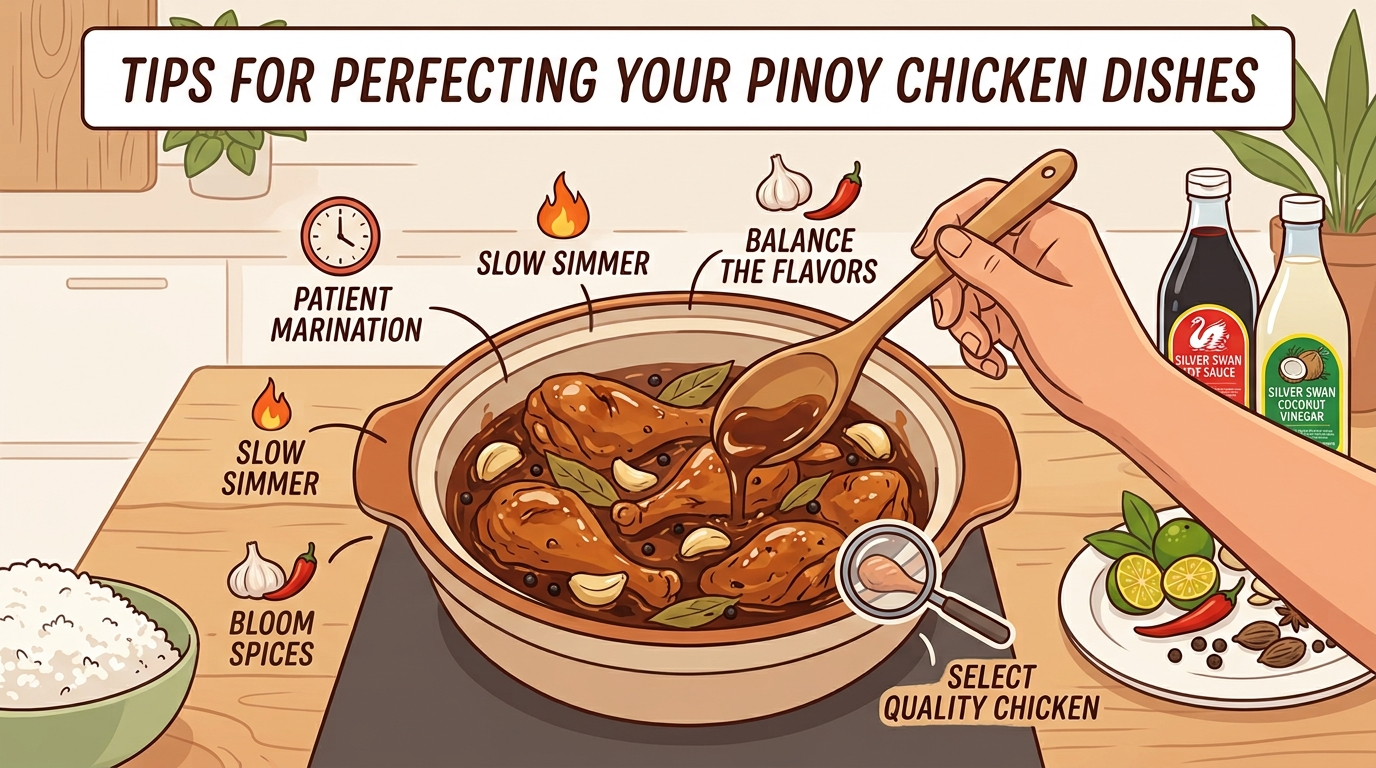
Mastering authentic Pinoy chicken recipes involves more than just following instructions; it requires understanding the nuances that elevate a good dish to a great one. Therefore, paying attention to specific techniques and ingredient choices is crucial.
Choosing the Right Chicken Cut and Marination Magic
Selecting the appropriate cut of chicken significantly impacts the final texture and flavor of your pinoy chicken recipe. For instance, chicken thighs and drumsticks are often preferred for stews like Adobo or Tinola due to their higher fat content, which keeps them moist and tender during longer cooking times. On the other hand, chicken breast works well for quicker stir-fries or dishes where a leaner protein is desired, such as Chicken Sotanghon. Always opt for fresh, high-quality chicken from a reputable source.
Proper marination is another cornerstone of delicious Filipino cuisine. It infuses the meat with deep flavor and helps tenderize it. For example, in Chicken Adobo, marinating the chicken in a mixture of soy sauce, vinegar, garlic, and peppercorns for at least 30 minutes (or even overnight for best results) allows these flavors to penetrate thoroughly. Never skip this step! Furthermore, acid from vinegar or calamansi in marinades also helps break down muscle fibers, leading to a more succulent dish. Consider adding a touch of brown sugar to your marinade for a subtle sweetness that balances the savory and tangy notes.
Essential Ingredients and Flavor Balance
Filipino cooking relies on a core set of ingredients that create its distinctive taste profile. Consequently, understanding these staples is key. Garlic, onions, and ginger form the aromatic trinity for many dishes, providing a foundational layer of flavor. Soy sauce (toyo) and vinegar (suka) are indispensable, offering the salty and sour elements that define many pinoy chicken recipes. Fish sauce (patis) adds a unique umami depth, often used to season during cooking or as a dipping sauce. If you don’t have calamansi, lime or lemon juice can be a good substitute, though the flavor profile will be slightly different.
Achieving the perfect balance of sweet, sour, and salty is paramount in Filipino cooking. This culinary philosophy ensures no single flavor overpowers another. For instance, in Chicken Afritada, the sweetness of tomato sauce and bell peppers is balanced by the saltiness of soy sauce and the slight tang from bay leaves. Therefore, taste your dish as you cook and adjust seasonings gradually. A pinch of sugar can temper excessive sourness, while a splash of vinegar can cut through richness. Don’t be afraid to experiment with small adjustments until you reach your desired flavor harmony. This iterative process is how many home cooks perfect their signature dishes.
Dietary Considerations and Customizations
Adapting Pinoy Chicken Recipes for Diverse Diets
Filipino cuisine, while incredibly flavorful, can often be adapted to suit various dietary needs and preferences. Many traditional pinoy chicken recipes, for instance, can be modified without sacrificing their authentic taste. This section explores how to make these dishes healthier and more inclusive.
Healthier Alternatives for Your Pinoy Chicken
To begin with, reducing sodium and fat content is straightforward. Many pinoy chicken recipes, such as Adobo or Tinola, utilize ingredients that can be easily swapped.
- Low-Sodium Options:
- Soy Sauce: Opt for low-sodium soy sauce. For example, in a classic Chicken Adobo, this simple switch significantly cuts down on sodium.
- Broth: Choose unsalted or low-sodium chicken broth, especially for dishes like Tinola or Sinigang.
- Seasonings: Use fresh herbs and spices more liberally. Garlic, ginger, and chili provide robust flavor without added salt.
- Low-Fat Alternatives:
- Chicken Cuts: Select leaner cuts of chicken, such as chicken breast, and remove the skin before cooking. Consequently, this reduces saturated fat.
- Cooking Methods: Instead of deep-frying, consider baking, grilling, or air-frying your chicken. For instance, a baked Chicken Inasal can be just as delicious as its grilled counterpart.
- Oil Usage: Measure cooking oil carefully. A little goes a long way, especially when sautéing aromatics.
Vegetarian and Vegan Adaptations
Furthermore, many pinoy chicken recipes can be creatively transformed into plant-based versions. Therefore, these adaptations allow everyone to enjoy the rich flavors of Filipino cooking.
- Plant-Based Protein Swaps:
- Tofu/Tempeh: These are excellent substitutes for chicken. For example, Tofu Adobo or Tempeh Afritada offer similar textures and absorb flavors beautifully.
- Mushrooms: Hearty mushrooms like oyster or shiitake can mimic the texture of meat in stews. Consider using them in a “Mushroom Tinola.”
- Jackfruit: Young jackfruit, particularly when cooked, has a remarkable shredded texture, making it ideal for dishes like “Jackfruit Adobo.”
- Flavor Enhancers:
- Umami Boosters: Use nutritional yeast, mushroom broth, or miso paste to add depth. These ingredients replicate the savory notes often found in meat-based dishes.
- Coconut Milk: This ingredient is already a staple in many Filipino dishes, such as Ginataang Manok. It naturally provides a creamy, rich base for vegan versions.
Adjusting Spice Levels
Finally, tailoring the heat in your pinoy chicken recipe is simple. Filipino cuisine embraces a range of spice levels, from mild to fiery.
- Reducing Heat: If you prefer milder flavors, use fewer chili peppers or remove the seeds and membranes, where most of the capsaicin resides. For instance, in a Bicol Express, you can significantly reduce the amount of siling labuyo.
- Increasing Heat: Conversely, to add more kick, incorporate extra fresh chilies, chili flakes, or a dash of hot sauce. Some enjoy an extra sprinkle of chili in their Chicken Curry.
- Balancing Flavors: Always taste as you go. This practice allows you to adjust the spice without overpowering other delicate flavors in the dish.
Serving Suggestions and Pairings
Elevating Your Pinoy Chicken Experience
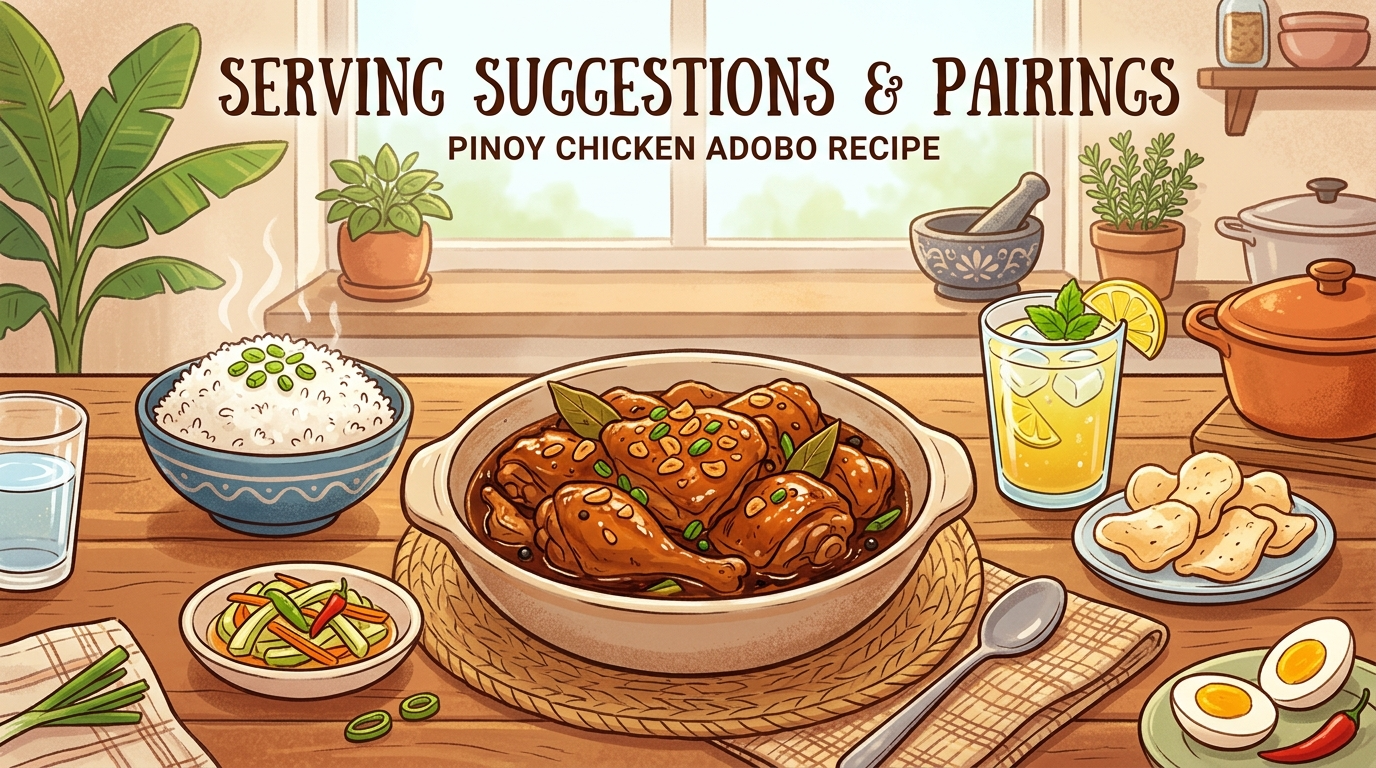
Serving a delicious Pinoy chicken recipe goes beyond just the main dish. Thoughtful pairings enhance the entire meal. Consider how different elements complement the rich and savory flavors. A well-rounded meal truly captures the essence of Filipino cuisine.
The Perfect Accompaniments
- Steamed White Rice: This is the quintessential partner for almost any Pinoy chicken recipe. Its neutral flavor and soft texture beautifully absorb the sauces. Moreover, it provides a comforting base for the robust flavors.
- Garlic Fried Rice (Sinangag): For a more flavorful option, sinangag is an excellent choice. The aromatic garlic adds an extra layer of taste. Consequently, it elevates even simple dishes like fried chicken.
- Atsara (Pickled Papaya): This sweet and tangy relish offers a refreshing contrast. Its bright flavors cut through the richness of many chicken dishes. Therefore, it’s a fantastic palate cleanser.
- Fresh Tomato and Onion Salad: A simple salad provides a light and zesty counterpoint. The acidity of the tomatoes balances savory elements. In addition, it adds a welcome crunch.
Traditional Filipino Condiments and Sauces
Filipino meals are often interactive, with diners customizing their flavors. Providing a selection of condiments is key. These additions allow everyone to personalize their pinoy chicken recipe experience.
- Toyomansi (Soy Sauce and Calamansi): This classic dipping sauce is incredibly versatile. The salty soy sauce combined with the tart calamansi juice creates a perfect balance. It’s ideal for grilled or fried chicken.
- Spiced Vinegar (Suka’t Sili): For those who enjoy a kick, spiced vinegar is essential. Chili peppers infused in vinegar add heat and tang. Moreover, it provides a delightful zing to almost any dish.
- Banana Ketchup: A uniquely Filipino condiment, banana ketchup offers a sweet and savory profile. It’s particularly popular with fried chicken. Consequently, it’s a must-have for a truly authentic spread.
Refreshing Beverage Pairings
Choosing the right beverage can further enhance your dining experience. Traditional Filipino drinks often complement the rich and varied flavors.
- Iced Tea or Fresh Calamansi Juice: These refreshing drinks offer a sweet and tangy balance. They cleanse the palate effectively. Therefore, they are excellent choices for cutting through savory dishes.
- Sodas or Fruit Juices: Popular soft drinks or local fruit juices like mango or pineapple are also common. Their sweetness provides a pleasant contrast to the main dishes. For example, a cold glass of mango juice pairs wonderfully with a spicy adobo.
- San Miguel Beer: For adult diners, a cold bottle of local beer is a popular pairing. Its crispness complements hearty chicken dishes. As a result, it’s a beloved choice for many Filipinos.
Featured & Popular Pinoy Chicken Recipes (User Favorites)
Top-Rated Pinoy Chicken Recipes: Community Favorites
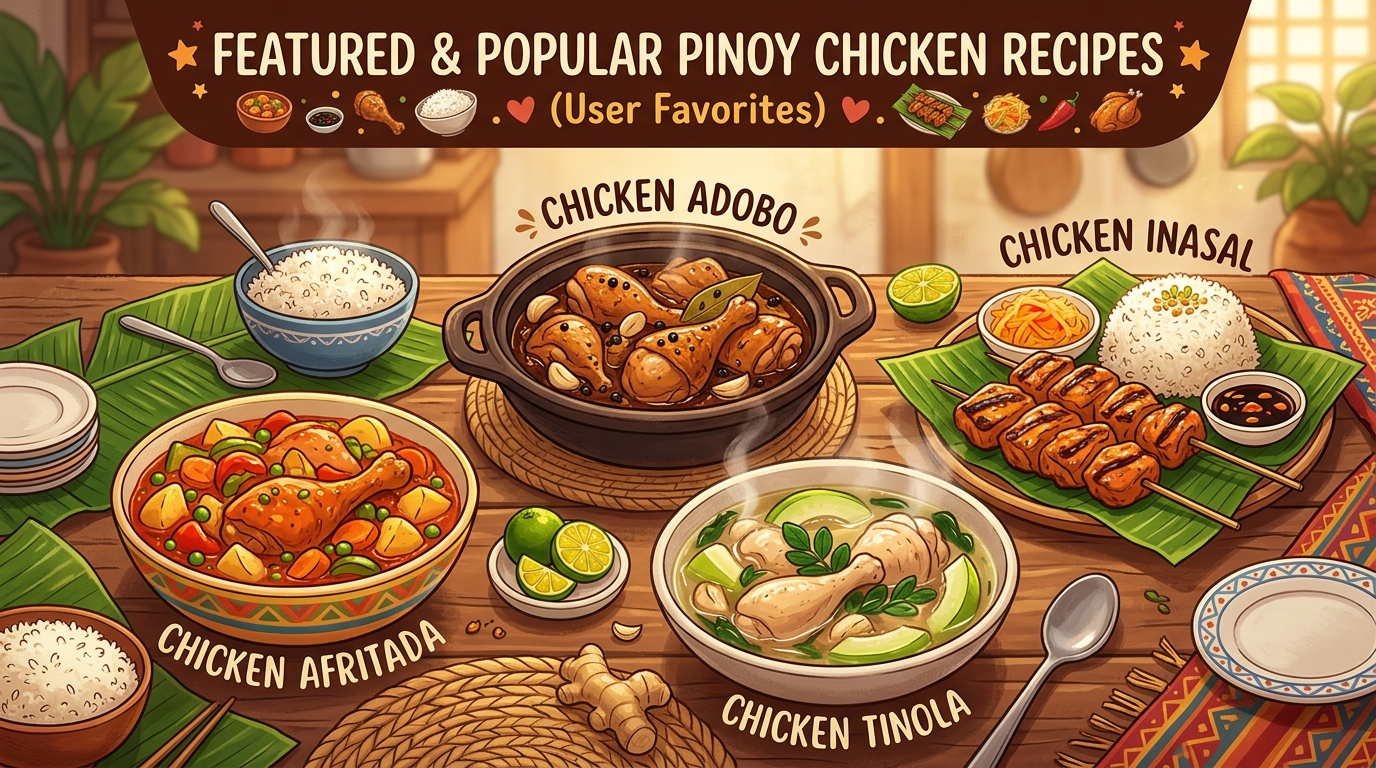
Our community consistently raves about several pinoy chicken recipes, highlighting their irresistible flavors and ease of preparation. These dishes represent the heart of Filipino home cooking. For instance, Chicken Adobo remains an undisputed champion. Its perfect balance of savory, sour, and slightly sweet notes makes it a staple. Many users praise its versatility; therefore, it’s often customized with coconut milk or a touch of chili. This classic pinoy chicken recipe is simple yet profoundly satisfying.
Another highly cherished dish is Chicken Tinola. This comforting ginger-broth soup, often with green papaya and malunggay leaves, is a favorite for its warmth and nutritional value. It’s particularly popular during cooler weather or when someone needs a comforting meal. Moreover, the freshness of the ingredients truly shines through. Our community also loves Chicken Afritada. This tomato-based stew, enriched with potatoes, carrots, and bell peppers, offers a hearty and flavorful experience. It’s an excellent choice for family gatherings. Consequently, it’s often prepared in larger batches.
Quick & Easy Pinoy Chicken Dishes
For busy weeknights, several pinoy chicken recipes stand out for their speed and simplicity without compromising on taste. Ginisang Manok (Sautéed Chicken) is a fantastic example. It involves quickly sautéing chicken pieces with garlic, onions, and various vegetables. This dish comes together in under 30 minutes, making it a perfect quick fix. Furthermore, it’s easily adaptable to whatever vegetables you have on hand.
Another popular choice for its ease is Pinoy Chicken Curry. While it might sound complex, the Filipino version is typically milder and simpler. It uses readily available curry powder and coconut milk. This creates a rich, aromatic sauce that pairs wonderfully with steamed rice. In addition, many users recommend adding potatoes and bell peppers for extra texture and flavor. Fried Chicken (Pinoy Style) also makes the list. This isn’t just any fried chicken; it often involves a unique marinade that imparts a distinct savory-sweet flavor. The result is incredibly crispy skin and juicy meat. It’s a guaranteed crowd-pleaser, especially with children. These user-favorite pinoy chicken recipes prove that delicious Filipino cuisine can be both authentic and convenient.
Conclusion: Your Journey into Filipino Chicken Cuisine
This culinary journey through the vibrant world of Pinoy chicken recipes has, hopefully, inspired you to explore the rich tapestry of Filipino flavors. We’ve delved into the comforting familiarity of Adobo, the tangy delight of Sinigang, and the festive cheer of Pancit Canton. Each dish, moreover, offers a unique window into the heart of Filipino gastronomy, showcasing how simple ingredients can transform into extraordinary meals. You’ve discovered the essential techniques, from marinating to slow simmering, that elevate these dishes from good to truly unforgettable. Consequently, mastering these recipes not only expands your cooking repertoire but also connects you with a culture that values food as a centerpiece of community and celebration.
Embracing Your Inner Filipino Chef
Now, armed with a newfound appreciation for the intricacies of Filipino cooking, we encourage you to step into your kitchen with confidence. Don’t be afraid to experiment with the various spices and aromatics that define a classic pinoy chicken recipe. For instance, adjusting the sourness in Sinigang or the sweetness in Adobo to your personal preference is part of the fun. Consider these recipes as starting points, therefore, allowing your creativity to flourish. Furthermore, sharing these delicious creations with friends and family is a fantastic way to introduce them to the warmth and hospitality that Filipino food embodies. Remember, every dish tells a story, and yours is just beginning.
Share Your Culinary Creations!
We’ve explored a diverse range of delectable Pinoy chicken recipes, from the hearty Tinola to the crispy Lechon Manok. We hope this guide has provided you with the inspiration and knowledge to recreate these authentic Filipino dishes in your own home. Moreover, we believe that the best way to truly appreciate a cuisine is to engage with its community. Therefore, we invite you to share your favorite Pinoy chicken recipe, your unique twists, or even your cooking triumphs with us! Your experiences enrich our collective culinary journey. To join a vibrant community of food enthusiasts and discover even more amazing recipes, Get started.
Thank you for reading our guide about pinoy chicken recipe.
Frequently Asked Questions
What makes Pinoy chicken recipes distinct from other chicken dishes?
Pinoy chicken recipes are characterized by their masterful balance of sour, sweet, salty, and savory notes, often incorporating unique indigenous ingredients like calamansi (a small citrus fruit) for tartness and coconut milk for creamy richness. The cooking methods frequently involve slow simmering, allowing flavors to meld deeply and resulting in incredibly tender and flavorful chicken. This combination of distinct flavors and cooking techniques, often influenced by centuries of trade and colonization, gives Filipino chicken dishes their unique character.
Why is chicken so important in Filipino culture and cuisine?
Chicken holds a special place in Filipino culture and cuisine because it is a versatile and readily available source of protein that is a staple in everyday meals and a star at festive gatherings. Historically, its adaptability allowed it to be incorporated into various cooking styles and regional preferences across the islands. Beyond its culinary appeal, chicken dishes represent hospitality, family gatherings, and national pride, making it more than just food but an integral part of Filipino heritage.
What is Chicken Adobo, and why is it considered the quintessential Filipino dish?
Chicken Adobo is widely regarded as the national dish of the Philippines. It features chicken braised in a savory, tangy sauce made from vinegar, soy sauce, garlic, peppercorns, and bay leaves. It’s considered quintessential because it perfectly embodies the characteristic Filipino balance of savory, tangy, and slightly sweet flavors. Its versatility, with regional variations, and its ability to taste even better the next day as flavors deepen, solidify its iconic status in Filipino cuisine.
What ingredients are typically found in Chicken Tinola, and what makes it a comforting dish?
Chicken Tinola is a comforting, broth-based soup typically made with chicken pieces (often bone-in for maximum flavor), green papaya or sayote (chayote) for subtle sweetness and tender texture, malunggay (moringa) leaves for nutrients and an earthy taste, and ginger, which provides a warm, aromatic base. Its simplicity yet profound depth of flavor, combined with its believed restorative properties, makes it a popular and comforting choice, especially when someone is feeling unwell, and a staple in many Filipino households.