Welcome to our comprehensive guide about chicken recipe pinoy.
Introduction to Filipino Chicken Recipes
Filipino cuisine boasts a vibrant tapestry of flavors. Indeed, chicken dishes are a cornerstone of this culinary tradition. These recipes offer a delightful journey for the palate. They range from savory stews to crispy fried delights. Moreover, they reflect the Philippines’ rich history and diverse cultural influences.
The Heart of Filipino Home Cooking
Chicken holds a special place in Filipino households. It is a versatile ingredient. For instance, it stars in everyday meals and celebratory feasts alike. Filipino chicken recipe pinoy are known for their bold and complex flavors. These often combine sour, sweet, salty, and umami notes. Adobo, perhaps the most famous, exemplifies this balance perfectly. Its unique blend of soy sauce, vinegar, garlic, and peppercorns creates an unforgettable taste. Furthermore, many dishes incorporate fresh ingredients. These include ginger, lemongrass, and calamansi. Consequently, each bite offers a burst of authentic Filipino taste.
Why Filipino Chicken Recipes Are a Global Favorite
The appeal of Filipino chicken extends far beyond its shores. Many food enthusiasts worldwide are discovering these incredible dishes. Their popularity stems from several key factors:
- Approachability: Many recipes use readily available ingredients. This makes them easy for home cooks to recreate.
- Flavor Profile: The distinct and well-balanced flavors are incredibly satisfying. They often introduce new and exciting tastes.
- Versatility: Chicken can be prepared in countless ways. This ensures there’s a Filipino chicken recipe for every occasion.
Consider Chicken Tinola, a comforting ginger-based soup. Or perhaps Chicken Inasal, a smoky, grilled masterpiece. Each offers a unique culinary experience.
What to Expect in This Guide: Variety and Versatility
This comprehensive guide will explore the best chicken recipe pinoy selections. We will delve into both time-honored classics and innovative modern interpretations. You will discover:
- Classic Staples: Learn to master traditional dishes. These are beloved across generations.
- Quick & Easy Options: Find efficient recipes for busy weeknights. These deliver authentic flavors without extensive effort.
- Essential Techniques: Gain valuable cooking tips. These will elevate your Filipino chicken dishes.
- Serving Suggestions: Explore ideal accompaniments. This will complete your meal.
Ultimately, this guide aims to empower you. It will help you confidently prepare delicious Filipino chicken. Therefore, get ready to embark on a flavorful adventure.
Classic Pinoy Chicken Recipes You Must Try
Iconic Filipino Chicken Dishes to Savor
Filipino cuisine boasts a rich tapestry of flavors, and its chicken recipes are undoubtedly at the heart of this culinary heritage. These classic dishes offer a delightful journey through the country’s vibrant food culture. Moreover, they showcase the unique blend of sweet, sour, salty, and savory that defines Filipino cooking.
Filipino Chicken Adobo: The National Treasure
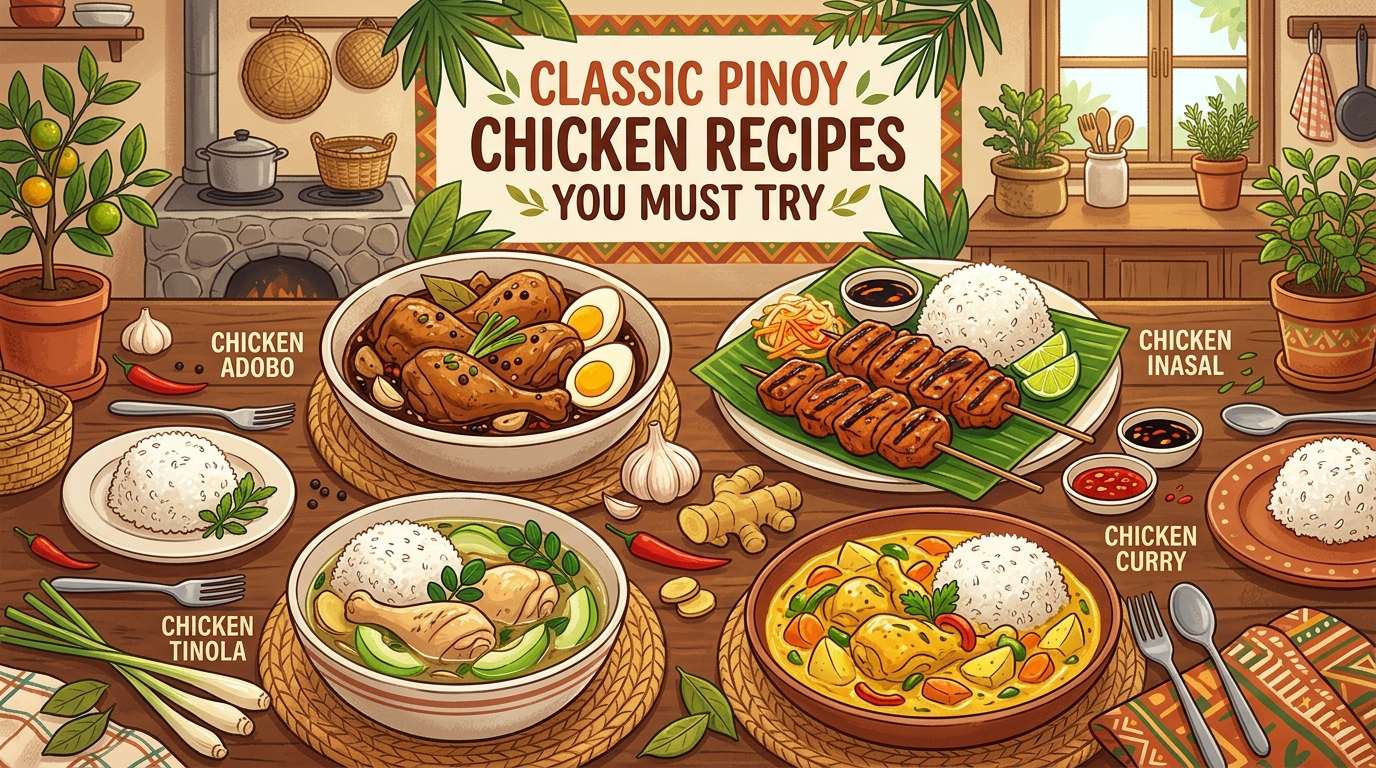
No discussion of Filipino food is complete without mentioning Chicken Adobo. Indeed, it is often considered the national dish. This iconic chicken recipe pinoy features chicken braised in a flavorful concoction of soy sauce, vinegar, garlic, bay leaves, and peppercorns. Consequently, the meat becomes incredibly tender and infused with a rich, tangy, and savory taste. For example, some regional variations include coconut milk for a creamier texture or a touch of sugar for added sweetness.
- Tip: Allow adobo to sit overnight. The flavors deepen considerably, making it even more delicious the next day.
- Best Practice: Brown the chicken pieces before braising to add extra depth of flavor and a pleasing texture.
- Serving Suggestion: Always serve with steaming hot white rice to soak up every drop of that incredible sauce.
Chicken Tinola: A Comforting Ginger Elixir
When seeking warmth and comfort, Chicken Tinola is the perfect choice. This light yet incredibly flavorful soup is a staple in many Filipino households. It features tender chicken pieces simmered in a clear, aromatic broth. The broth is primarily flavored with fresh ginger, garlic, and onions. Furthermore, green papaya or sayote (chayote) and malunggay (moringa) leaves are added, providing a subtle sweetness and a boost of nutrients. As a result, it’s often served as an appetizer or a light main course.
- Recommendation: Use bone-in chicken pieces. They impart more flavor to the broth.
- Ingredient Focus: The fresh ginger is crucial for the soup’s distinctive comforting warmth.
More Must-Try Classic Chicken Recipes
Chicken Sinigang: Tangy and Satisfying Sour Soup
For those who appreciate a bold, sour kick, Chicken Sinigang is an absolute must-try. This beloved Filipino sour soup is characterized by its distinctively tangy broth, typically flavored with tamarind (sampalok). In addition to chicken, it usually includes various vegetables such as daikon radish, long beans, okra, and taro. The combination creates a hearty and refreshing meal. Moreover, the sourness provides a delightful contrast to the richness of the chicken.
- Pro Tip: Adjust the level of sourness by adding more or less tamarind paste or powder according to your preference.
- Vegetable Variety: Don’t hesitate to experiment with other vegetables like eggplant or kangkong (water spinach).
Inasal na Manok: The Iconic Grilled Chicken
Hailing from the Western Visayas region, particularly Bacolod, Inasal na Manok is a grilled chicken dish renowned for its unique marinade and vibrant color. The chicken pieces are marinated in a mixture of vinegar, calamansi juice, ginger, garlic, and annatto oil. This annatto oil gives it a characteristic reddish-orange hue. Consequently, it’s grilled over hot coals, resulting in smoky, juicy, and incredibly flavorful chicken. It’s often served with a dipping sauce of soy sauce, calamansi, and chili. This chicken recipe pinoy is a true culinary gem.
- Flavor Secret: The annatto oil not only colors the chicken but also adds a subtle earthy flavor.
- Serving Suggestion: Pair with garlic rice and a side of atchara (pickled papaya) for a complete meal.
Modern & Quick Pinoy Chicken Dishes for Busy Weeknights
Modern & Quick Pinoy Chicken Dishes for Busy Weeknights
Busy weeknights demand delicious yet efficient meal solutions. Fortunately, Filipino cuisine offers a wealth of chicken recipes that are both quick to prepare and bursting with flavor. These modern adaptations and naturally fast dishes allow you to enjoy authentic Filipino tastes without spending hours in the kitchen.
One excellent option is Quick Chicken Adobo Flakes. While traditional adobo can simmer for a while, shredding leftover adobo chicken and pan-frying it until crispy transforms it into a speedy, delightful dish. Simply sauté garlic, add the shredded chicken, and crisp it up. Serve with hot rice for a satisfying meal. Moreover, Soy-Garlic Chicken Stir-fry is another fantastic choice. Marinate chicken pieces in soy sauce, garlic, a touch of vinegar, and sugar for just 15-20 minutes. Then, quickly stir-fry with your favorite vegetables like bell peppers and snap peas. This method ensures a flavorful chicken recipe pinoy style in under 30 minutes.
Speedy Chicken Options for Flavorful Dinners
For those craving a comforting stew without the long cook time, consider Ginataang Manok (Chicken in Coconut Milk). This version focuses on quick-cooking chicken cuts like boneless thighs or breast strips. Sauté ginger, garlic, and onions, then add chicken and simmer in coconut milk with spinach or malunggay leaves. It’s a creamy, savory dish ready in about 25 minutes. In addition, Chicken Sotanghon Guisado (Sautéed Vermicelli Noodles) offers a complete meal in one pan. This involves stir-frying chicken strips with transparent vermicelli noodles, vegetables like carrots and cabbage, and a savory sauce. The noodles cook very quickly, thus making it an ideal weeknight dinner.
Tips for Speed and Flavor:
- Pre-marinate: Prepare marinades the night before or in the morning to infuse maximum flavor with minimal effort.
- Utilize boneless cuts: Boneless chicken thighs or breast strips cook significantly faster than bone-in pieces.
- One-pan wonders: Opt for recipes that minimize cleanup and cooking steps, like stir-fries or noodle dishes.
- Batch cook rice: Having cooked rice ready to go saves valuable time.
These quick and easy Filipino chicken recipe options prove that authentic flavors don’t require extensive cooking. Therefore, you can enjoy a taste of the Philippines even on your busiest evenings.
Essential Tips for Cooking Delicious Filipino Chicken
Essential Tips for Cooking Delicious Filipino Chicken
To truly master Filipino chicken dishes, understanding a few core techniques is key. Firstly, selecting the right chicken cut significantly impacts the final result. For instance, bone-in, skin-on chicken thighs are excellent for stews like Chicken Adobo because the bone adds flavor and the skin renders fat, creating a richer sauce. Conversely, boneless, skinless chicken breasts are ideal for quick stir-fries or Chicken Afritada when you prefer a leaner option. Therefore, consider the dish’s requirements when choosing your cut.
Mastering marinades is another crucial step. Filipino cuisine heavily relies on marinades for deep flavor infusion. For example, Chicken Inasal benefits from a long marinade in vinegar, calamansi, soy sauce, garlic, and annatto oil. A minimum of 30 minutes is recommended, however, overnight marinating in the refrigerator yields the best results. This allows the flavors to penetrate the meat thoroughly, resulting in a more succulent and aromatic chicken recipe pinoy.
Achieving Perfect Texture and Flavor in Your Chicken Recipe Pinoy
Achieving perfectly moist chicken every time is paramount. Overcooking can lead to dry, tough meat, consequently ruining the dish. For pan-fried or grilled chicken, use a meat thermometer; chicken is safely cooked at 165°F (74°C). Furthermore, allowing the chicken to rest for a few minutes after cooking helps redistribute juices, ensuring tenderness. For stews, slow simmering on low heat prevents the chicken from becoming stringy.
Adjusting spice levels and flavors to your liking is also important. Filipino dishes often feature a balance of savory, sour, and sometimes spicy notes. For instance, in Chicken Tinola, you might add more ginger for a stronger aromatic kick or a touch of green chili for heat. Taste as you go and adjust seasonings like salt, pepper, soy sauce, or vinegar accordingly. This iterative process guarantees the dish suits your palate.
Troubleshooting Common Issues with Filipino Chicken Dishes
Troubleshooting common cooking issues can save your dish. If your Adobo sauce is too thin, for example, simmer it uncovered for a longer period to reduce and thicken it naturally. Conversely, if it becomes too thick, a splash of water or chicken broth can easily rectify it. For crispy chicken skin, pat the skin thoroughly dry before cooking and use a hot pan with a little oil. As a result, you’ll achieve that desirable crunch. Following these tips will elevate your Filipino chicken cooking journey.
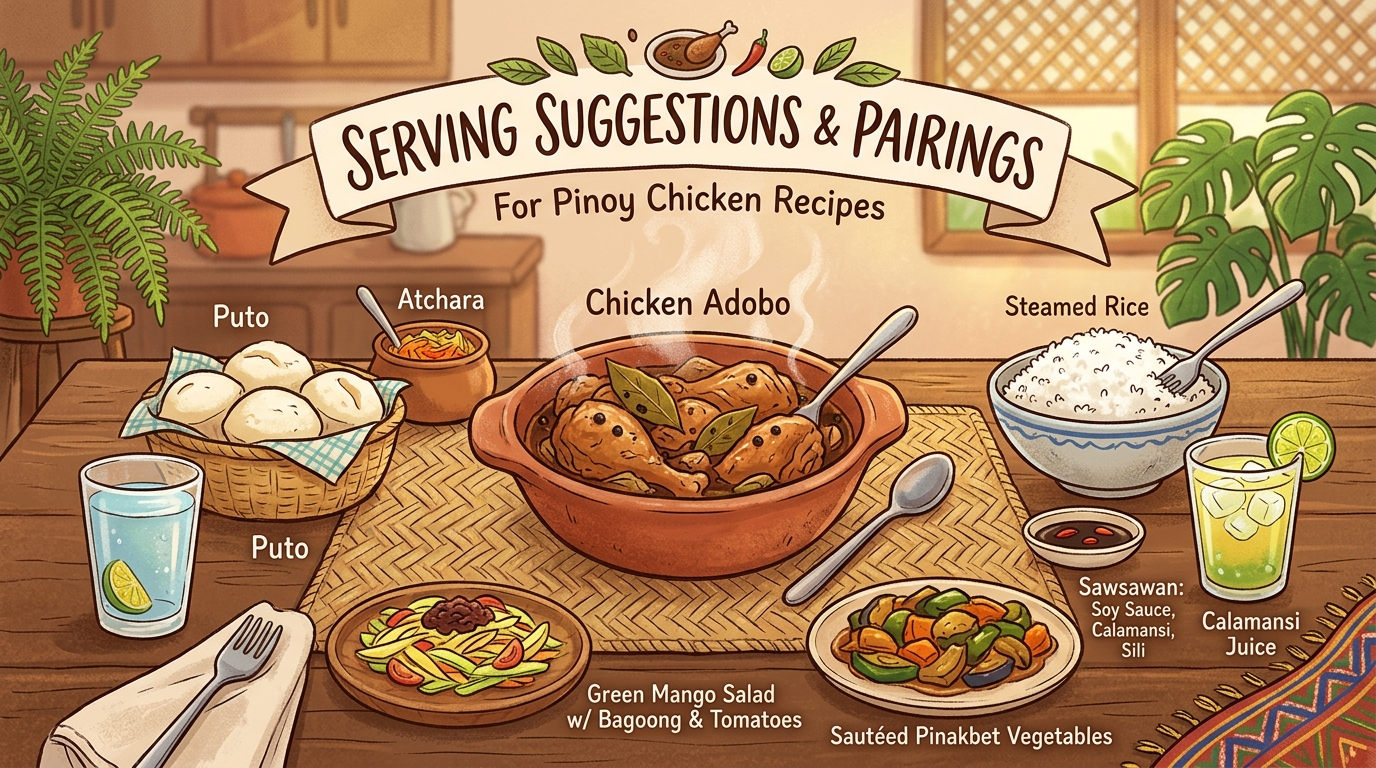
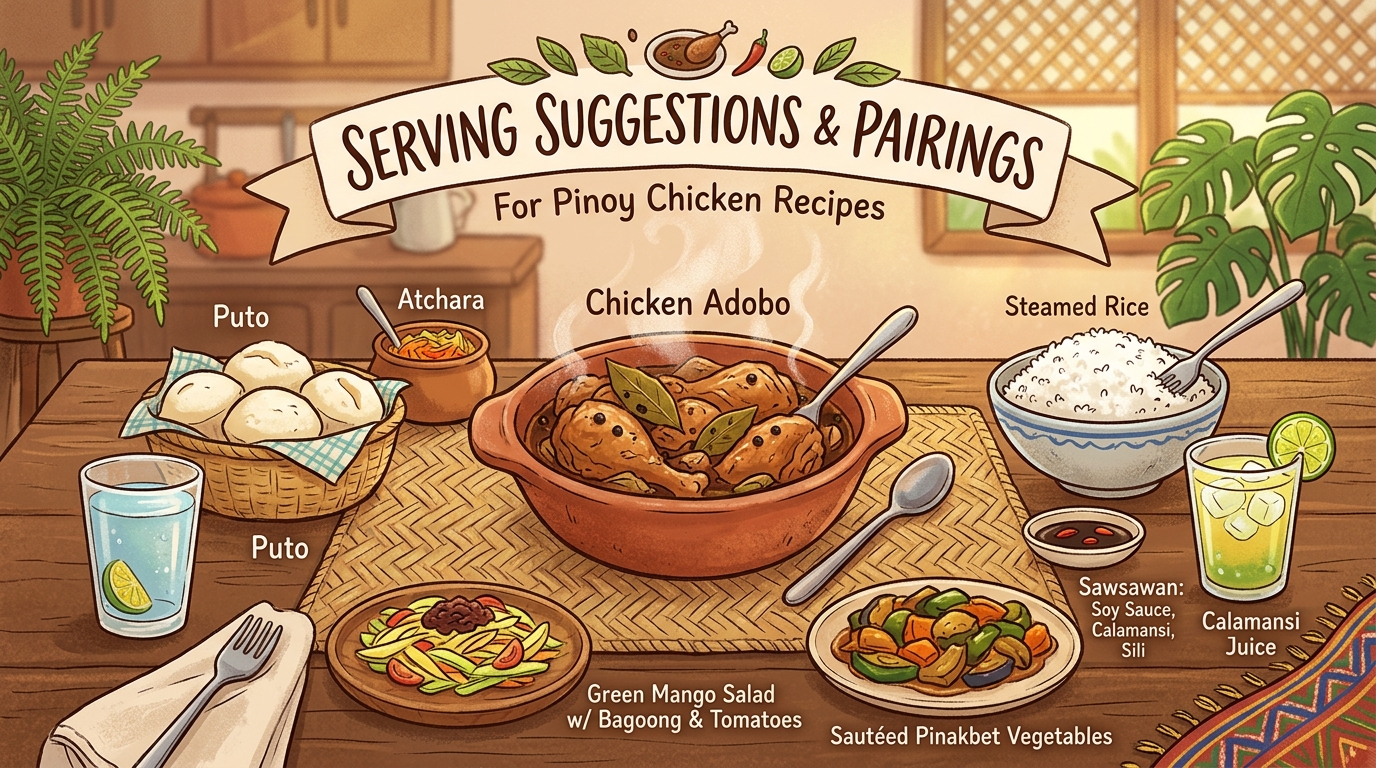
Serving Suggestions and Pairings
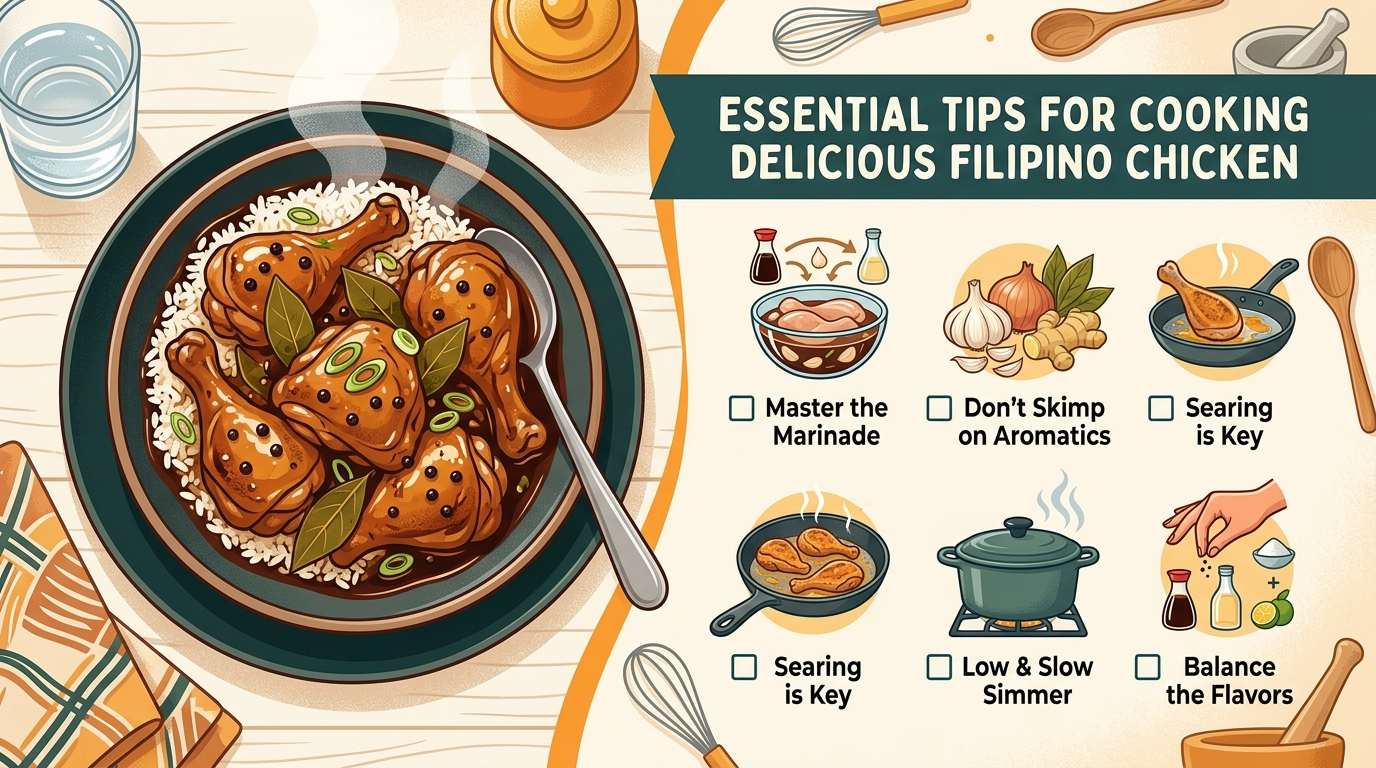
Elevate your Filipino chicken recipe pinoy experience with thoughtful accompaniments. While rice is a staple, exploring other pairings truly enhances the meal. Consider these delicious options to complement your savory chicken dishes.
Beyond Plain Rice: Creative Carbohydrate Companions
Though rice is traditional, diverse carbohydrate choices can offer exciting textures and flavors.
- Garlic Fried Rice (Sinangag): This is a classic choice. Its savory garlic notes perfectly cut through the richness of many chicken recipe pinoy dishes. It adds an extra layer of aroma and taste.
- Pancit Canton or Bihon: These stir-fried noodle dishes are fantastic. They provide a different mouthfeel and absorb the delicious sauces from your chicken. Moreover, they make the meal more substantial and varied.
- Steamed Sweet Potatoes or Yams: For a touch of sweetness and earthy flavor, these are excellent. They offer a comforting contrast to the savory chicken. Furthermore, they are a healthier alternative.
- Crusty Bread or Dinner Rolls: Use these for dipping into rich sauces. They are perfect for soaking up every last drop of adobo or afritada. Consequently, you won’t waste any flavorful liquid.
Vibrant Vegetable Sides and Fresh Salads
Balancing your chicken recipe pinoy with fresh vegetables is key. These additions provide essential nutrients and contrasting textures.
- Sautéed Kangkong (Water Spinach) with Garlic: This simple yet flavorful dish offers a nice green crunch. It is quick to prepare and incredibly healthy. Therefore, it’s an ideal partner.
- Ensaladang Mangga (Green Mango Salad): The tangy and refreshing taste of green mango salad is superb. It cuts through the richness of fried or stewed chicken. Its vibrant flavor provides a palate cleanser.
- Pinakbet (Mixed Vegetable Stew): This hearty vegetable dish, with its medley of local vegetables and bagoong (shrimp paste), adds depth. It offers a complex flavor profile that complements many chicken dishes. However, be mindful of its strong flavor.
- Blanched Okra or Eggplant with Bagoong: Simple blanched vegetables served with a side of bagoong provide a refreshing bite. They are easy to prepare and add a healthy component.
Beverage Pairings for Filipino Cuisine
Selecting the right drink can significantly enhance your dining experience.
- Calamansi Juice: This traditional Filipino lime drink is wonderfully refreshing. Its tartness cleanses the palate, making it ideal for richer chicken dishes. Moreover, it’s packed with Vitamin C.
- Iced Tea (Sweet or Unsweetened): A classic and versatile choice. It offers a neutral base that pairs well with most flavors. Consequently, it’s always a safe bet.
- San Miguel Pale Pilsen or Red Horse Beer: For adult diners, a cold Filipino beer is a popular pairing. Its crispness and slight bitterness complement savory chicken dishes beautifully. Furthermore, it’s a truly authentic experience.
- Buko Juice (Fresh Coconut Water): Light, hydrating, and naturally sweet. This tropical drink is perfect for cutting through the richness of some dishes. It offers a subtle, refreshing taste.
Remember, the best pairing ultimately comes down to personal preference. Experiment with these suggestions to discover your favorite combinations. Enjoy your delicious Filipino chicken recipe feast!
Dietary Considerations and Ingredient Substitutions
Navigating dietary needs while enjoying delicious Filipino chicken recipes is entirely possible. With thoughtful substitutions, you can adapt these classic dishes to suit various health goals and restrictions.
Adapting Your Chicken Recipe Pinoy for Healthier Choices
Many traditional Filipino dishes, while incredibly flavorful, can be high in sodium or fat. However, simple modifications can make them much healthier. For instance, when preparing a chicken recipe pinoy style, consider reducing the amount of soy sauce. Instead, you can enhance flavor with fresh herbs like bay leaves and peppercorns. Furthermore, opting for lean cuts of chicken, such as breast meat, naturally lowers the fat content. You can also remove the skin before cooking. Consequently, this significantly cuts down on saturated fat. Another effective strategy is to skim excess oil from stews like Chicken Adobo after chilling. This hardens the fat, making it easy to remove.
Ingredient Swaps for Specific Diets
- Low-Sodium Options:
- Soy Sauce: Choose low-sodium soy sauce. Alternatively, use coconut aminos for a soy-free, lower-sodium alternative.
- Patis (Fish Sauce): Look for low-sodium fish sauce brands. Moreover, a smaller quantity can still deliver umami flavor.
- Bouillon Cubes: Opt for low-sodium chicken broth or homemade stock instead of bouillon.
- Reduced-Fat Approaches:
- Chicken Cuts: Always choose skinless chicken thighs or breasts.
- Cooking Method: Instead of deep-frying, try baking, grilling, or air-frying chicken. For example, Fried Chicken can be oven-baked for a crispier, healthier result.
- Coconut Milk: Use light coconut milk in dishes like Chicken Curry. You can also dilute full-fat coconut milk with water or broth.
Allergen-Friendly and Plant-Based Adaptations
Addressing common allergens and catering to vegetarian or vegan diets requires careful ingredient selection. Many Filipino chicken recipes can be surprisingly adaptable.
Allergen-Friendly Swaps
- Gluten-Free:
- Soy Sauce: Tamari or gluten-free soy sauce are excellent replacements. Coconut aminos also work well.
- Flour (for dredging): Use rice flour or cornstarch for gluten-free coatings.
- Nut-Free: Most traditional Filipino chicken recipes are naturally nut-free. However, always check ingredient labels for cross-contamination, especially with sauces or pre-made marinades.
- Dairy-Free: Filipino cuisine rarely uses dairy in savory chicken dishes. Therefore, most chicken recipe pinoy options are already dairy-free.
Vegetarian and Vegan Adaptations
While these are chicken-focused recipes, the flavor profiles can inspire plant-based versions.
- Protein Substitution:
- Tofu or Tempeh: These absorb marinades beautifully. They are perfect for Adobo or Tinola.
- Mushrooms: Large portobello mushrooms can mimic the texture of meat in stews.
- Plant-Based Chicken Alternatives: Many brands offer convincing chicken-like substitutes.
- Flavor Base:
- Vegetable Broth: Use this instead of chicken broth.
- Umami Boosters: Incorporate dried shiitake mushrooms, nutritional yeast, or a touch of miso paste to deepen flavors. For instance, Adobo can be made with mushroom broth and extra garlic.
- Coconut Milk: This ingredient is naturally vegan and common in many Filipino dishes, making it easy to adapt.
By implementing these thoughtful substitutions, you can ensure that everyone at your table can enjoy the rich and diverse flavors of Filipino cuisine.
Advanced Techniques and Pro Tips
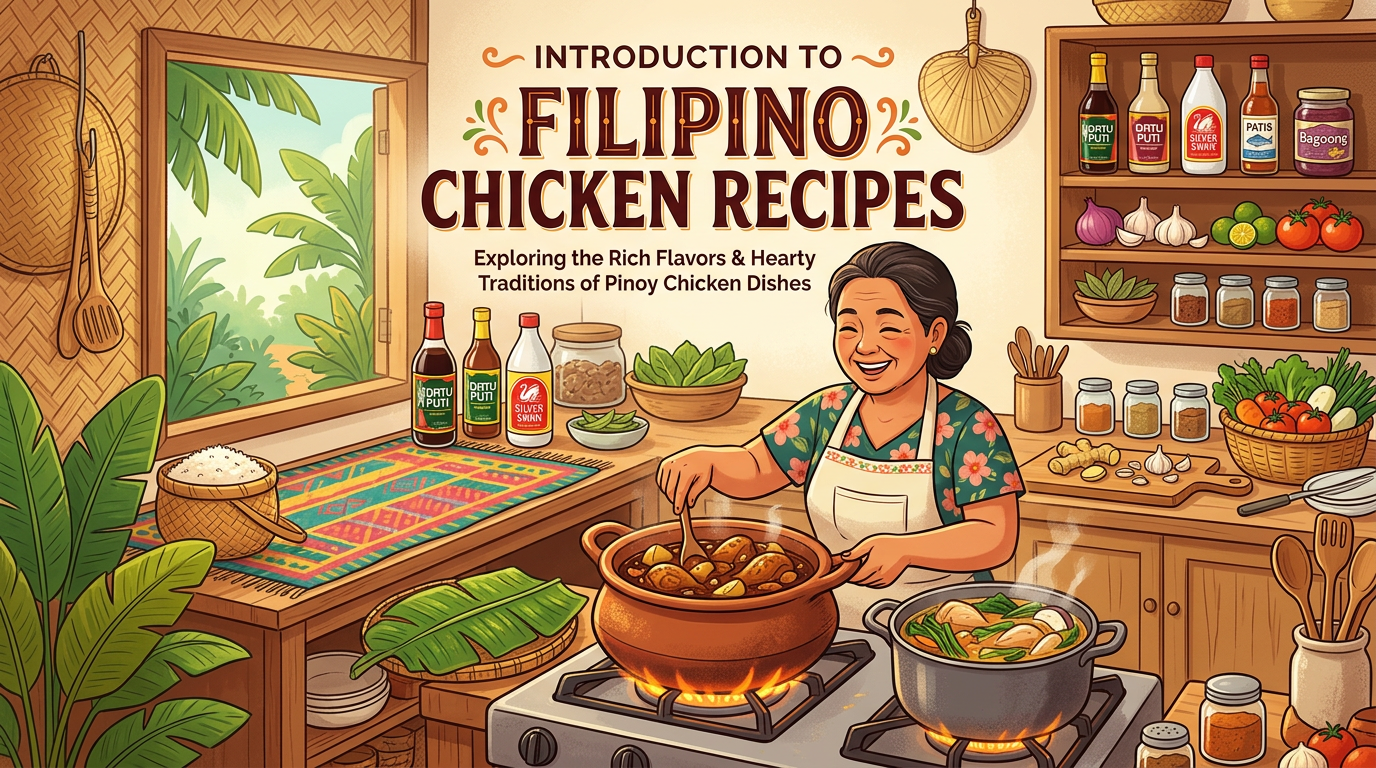
Elevating Your Filipino Chicken Cooking: Advanced Techniques & Pro Tips
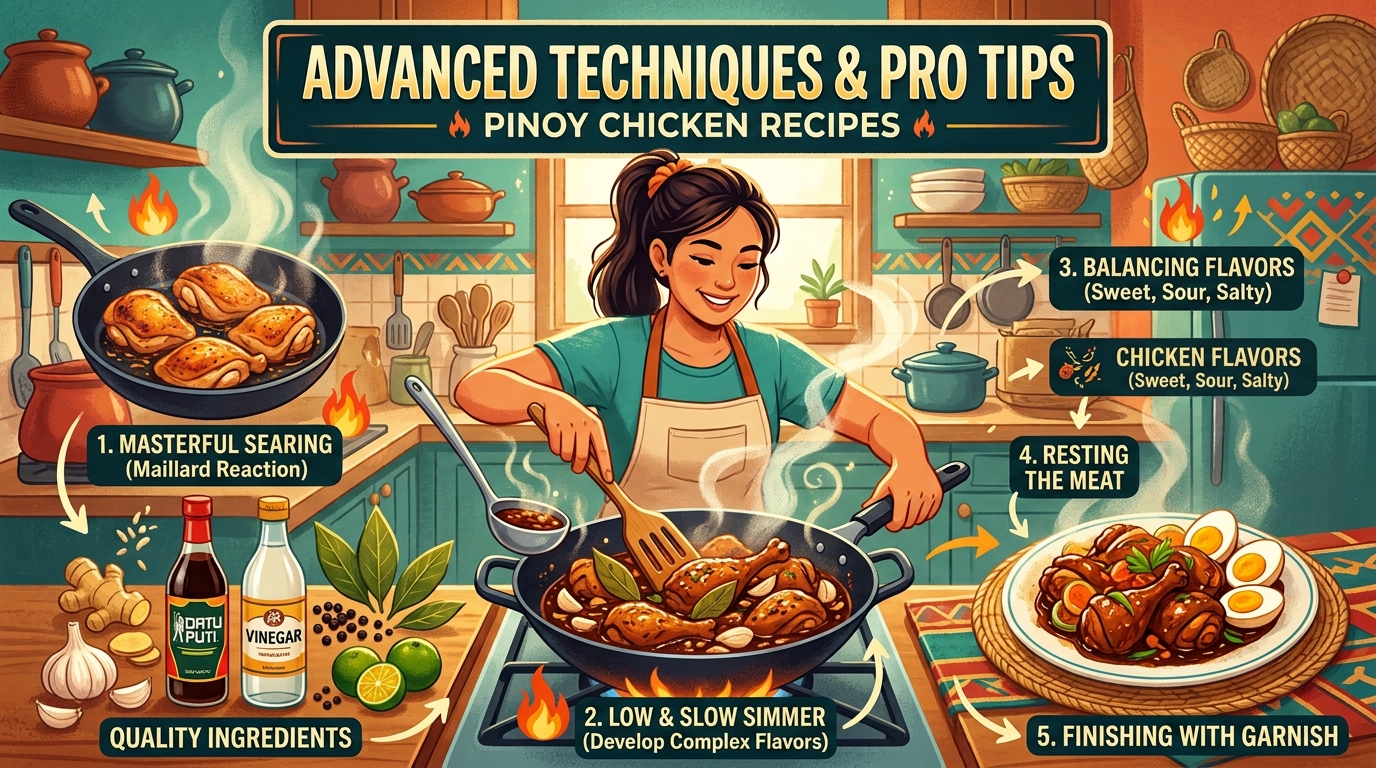
Moving beyond the basics elevates your Filipino chicken dishes from good to unforgettable. Therefore, mastering a few advanced techniques can significantly enhance flavor and texture. For instance, consider the art of marinade penetration. While classic recipes often call for short marinating times, extending this period for tougher cuts, like drumsticks or thighs, can lead to deeper flavor infusion. Consequently, aim for at least 6-8 hours, or even overnight, for maximum impact. Moreover, pricking the chicken skin with a fork before marinating allows the flavors to penetrate more effectively.
Another pro tip involves browning the chicken strategically. Many Filipino chicken recipes, such as Adobo or Afritada, benefit immensely from a good sear. This step creates a rich, caramelized crust, adding a layer of umami that a simple simmer can’t achieve. Therefore, ensure your pan is hot enough and avoid overcrowding it. Brown the chicken in batches if necessary, allowing each piece to develop that coveted golden-brown exterior. Furthermore, deglazing the pan after browning with a splash of liquid, like vinegar or broth, captures all those flavorful bits, incorporating them back into your sauce.
Mastering Texture and Doneness for Your Chicken Recipe Pinoy
Achieving perfect texture is crucial for any chicken recipe pinoy. For example, when making crispy dishes like Fried Chicken, a double-fry method can yield exceptional results. First, fry the chicken at a lower temperature (around 325°F or 160°C) until cooked through. Then, increase the temperature to 375°F (190°C) and fry again for a shorter period until golden and extra crispy. This ensures both thorough cooking and a satisfying crunch.
Additionally, monitoring internal temperature is key to avoiding overcooked or undercooked chicken. While many home cooks rely on visual cues, a reliable meat thermometer provides accuracy. Insert the thermometer into the thickest part of the chicken, avoiding bones. For most chicken cuts, a safe internal temperature is 165°F (74°C). Consequently, removing the chicken slightly before it reaches this temperature and allowing it to rest will result in juicier meat, as carryover cooking will bring it to the ideal doneness. Resting the chicken for 5-10 minutes before serving allows the juices to redistribute, preventing dry meat. This simple step makes a significant difference in the final product.
Conclusion: Your Filipino Chicken Cooking Journey
As we conclude this culinary exploration, your journey into the world of Filipino chicken recipes is truly just beginning. You’ve discovered the rich tapestry of flavors, from the vinegary tang of Adobo to the comforting warmth of Tinola. Moreover, you’ve seen how these dishes, whether classic or modern, embody the heart and soul of Filipino hospitality.
Embracing the Filipino Culinary Spirit
The beauty of a good chicken recipe pinoy lies in its adaptability and the stories it tells. Each dish reflects generations of culinary wisdom, passed down through families. For instance, consider the enduring popularity of Chicken Adobo; it’s more than just a meal, it’s a cultural touchstone. Similarly, the vibrant hues and complex flavors of dishes like Chicken Inasal speak to the regional diversity of the Philippines. Therefore, approaching these recipes isn’t just about following instructions; it’s about connecting with a vibrant culinary heritage. Furthermore, embracing the Filipino culinary spirit means understanding the balance of sweet, sour, salty, and savory that defines many of these preparations.
Your Path to Culinary Mastery
Now, armed with a deeper understanding of essential techniques and ingredient substitutions, you are well-equipped to personalize these dishes. Don’t be afraid to experiment! Perhaps you’ll add a touch more ginger to your Tinola, or incorporate a unique spice blend into your fried chicken recipe pinoy. In addition, consider exploring different cuts of chicken or varying cooking methods to discover new textures and flavors. Remember, the best chefs are often those who innovate while respecting tradition. Consequently, each meal you prepare becomes a reflection of your evolving culinary skills and personal taste.
We encourage you to share your culinary successes and insights. The Filipino food community thrives on shared experiences and new interpretations. So, whether you’ve perfected your Chicken Afritada or invented a new twist on Chicken Curry, let your kitchen be a place of joyful creation. To continue your culinary adventure and discover even more exciting recipes and cooking tips, Get started.
Thank you for reading our guide about chicken recipe pinoy.